BrowserPod icon
BrowserPod icon

BrowserPod

BrowserPod is a browser-based virtual machine. Its API provides a lightweight Linux kernel, replacing expensive and complex cloud infrastructure by delegating server processes to the client's browser via WebAssembly.
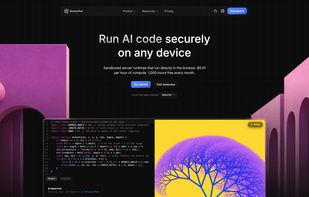
Screenshot of homepage for API

Cost / License

  • Freemium (Subscription)
  • Proprietary

Platforms

  • Self-Hosted
  • Online
  • Windows
  • Mac
  • Linux
0likes
0comments
0articles

Features

Properties

  1.  Lightweight
  2.  Privacy focused

Features

  1. Git icon  Git Support
  2.  Unlimited storage
  3.  Real time collaboration
  4.  Container Virtualization
  5.  Command line interface
  6.  Ad-free
  7.  No Tracking
  8.  Sandbox

BrowserPod News & Activities

Highlights All activities

Recent activities

BrowserPod information

  • Developed by

    GB flagLeaning Technologies
  • Licensing

    Proprietary and Freemium product.
  • Pricing

    Subscription that costs up to $20 per month + free version with limited functionality.
  • Alternatives

    2 alternatives listed
  • Supported Languages

    • English
BrowserPod was added to AlternativeTo by Liam-McCaffrey on and this page was last updated .
No comments or reviews, maybe you want to be first?

What is BrowserPod?

BrowserPod is a browser-based virtual machine. Its API provides a lightweight Linux kernel, replacing expensive and complex cloud infrastructure by delegating server processes to the client's browser via WebAssembly.

Developers use BrowserPod to run sandboxes for AI code, create developer tools and documentation without the cloud compute, and as part of wider enterprise transformation programs aiming to reduce their cloud costs and dependencies. Instead of provisioning costly cloud servers, BrowserPod allows you to execute full-stack workloads directly within the user’s browser tab. Each pod is ephemeral, constrained by the browser’s security model, and isolated from the host operating system via a dedicated syscall layer

The Linux kernel enables wide compatibility across a range of native runtimes, including Node.js, Rust, Python, Ruby and Go.

Official Links