Angular Native icon
Angular Native icon

Angular Native

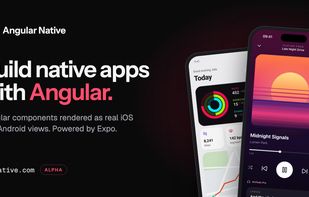
Angular apps, rendered as real native iOS and Android views, on React Native's Fabric renderer.
Angular Native screenshot 1

Cost / License

  • Free
  • Open Source (MIT)

Application type

Platforms

  • Angular
  • JavaScript
  • Typescript
  • Self-Hosted
0likes
0articles
Save

Features

Properties

  1.  Support for Themes

Features

  1.  Transitions Effects
  2.  Extensible by Plugins/Extensions
  3. Android icon  Android Development
  4.  Native application
  5.  Support for Typescript

Angular Native News & Activities

Highlights All activities

Recent activities

Angular Native information

AlternativeTo Category

Development

GitHub repository

  •  116 Stars
  •  2 Forks
  •  0 Open Issues
  •   Updated  
View on GitHub

Popular alternatives

View all
Angular Native was added to AlternativeTo by Paul on and this page was last updated .

No comments or reviews, maybe you want to be first?

Official Links

What is Angular Native?

Angular apps, rendered as real native iOS and Android views.

Angular Native renders Angular components straight onto React Native's Fabric renderer, so a <view> is a UIView on iOS and an android.view.View on Android, and React is never in the render path. You write standalone components, signals, Signal Forms and @angular/router routes as you would for the web, then create, run, hot reload and ship the app with Expo.

Elements are Angular components imported like any other, with lowercase names. Stylesheets compile to native styles at build time.

Features:

  • Native rendering. An incremental renderer commits only what changed to Fabric, with native text, images, scroll views, virtual and section lists, text inputs, switches, modals and gestures.
  • CSS and Tailwind. Component stylesheets, CSS variables, media queries, dark mode, transitions and @keyframes, plus a Tailwind preset with ios: and android: variants.
  • Native navigation. @angular/router over native stacks, tabs, headers, modals and sheets, with guards, resolvers, lazy routes and deep links.
  • Forms. Signal Forms bound to native controls.
  • Expo modules as Angular services. Camera, location, notifications, secure storage, the file system, SQLite, biometrics, maps, haptics and more, injected like any other service.
  • Animation. animate.enter and animate.leave, CSS transitions, Animated and Reanimated worklets.
  • Testing. A Testing Library API that runs components in Node against a fake Fabric, with no simulator.
  • Fits existing workspaces. Generators for the Angular CLI (ng add @ng-native/schematics) and Nx (nx add @ng-native/nx).
  • The web too. @ng-native/web renders the same components to the DOM.