


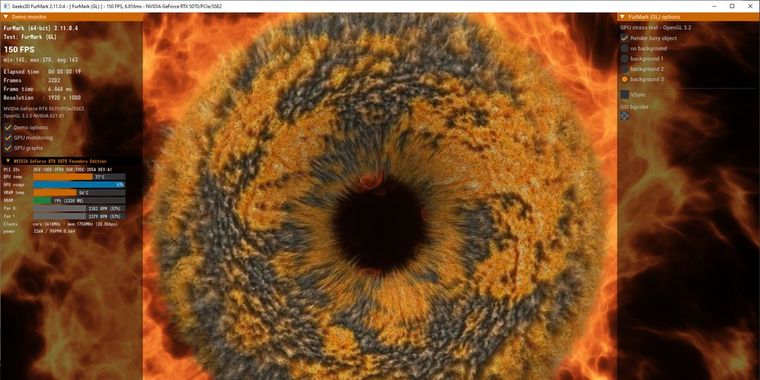

FurMark 2.11 enhances GPU stress testing capabilities and extends hardware compatibility
After an unusually quiet year, the first such gap in nearly two decades, FurMark 2 returns with version 2.11, the latest iteration of the widely-used GPU stress testing utility. Available for Windows (32/64-bit) and Linux across both x86_64 and ARM64 architectures, the software continues its reputation as a cross-platform tool for pushing graphics cards to their limits through OpenGL and Vulkan rendering tests. The update introduces a new dynamic fire-themed background and refines the graphical user interface with support for 1920×720 resolutions, alongside expanded antialiasing options controlled during demos.
Beyond visual tweaks, FurMark 2.11 brings meaningful technical improvements for power users conducting extended stability tests. Windows users can now monitor GPU core hotspot and memory temperatures directly within the GPU-Z output window, while elapsed time tracking has been reformatted to display days, hours, minutes, and seconds, essential for marathon stress test sessions. Bug fixes address previously reported issues on Linux systems running Wayland compositors and resolve input processing problems when running full-screen OpenGL windows with MSAA across multiple monitors. Under the hood, the update integrates GPU Shark 2.11, GPU-Z 2.71, and GeeXLab 0.67.2 libraries, with hardware compatibility extended to include newer NVIDIA, AMD, and Intel GPU models, as well as new AIB partner models names.




- Benchmark Tool
- Free
- Proprietary
Related news
External links
- FurMark 2.11.0 GPU Stress Test and Benchmark ReleasedGeeks3D • Official source
No comments so far, maybe you want to be first?