


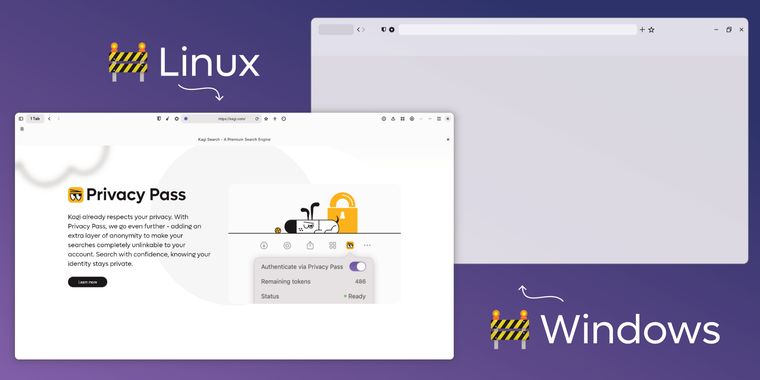

Kagi ends development of Orion for Linux and Windows, open sources code to community
In a strategic shift that underscores the challenges of independent browser development, Kagi has announced it will end official development of Orion for Linux and Windows, redirecting resources to focus exclusively on the macOS and iOS versions of its privacy-focused web browser. The move comes nearly a year after the search company unveiled Orion for Linux, which had generated considerable excitement among users seeking a WebKit-based alternative to Chromium-dominated browsers outside Apple's ecosystem. Kagi stated that while the current Linux beta will remain functional, it will cease receiving updates from Kagi after October 2, 2026. The planned Windows release, originally slated for late 2026, will similarly not materialize under Kagi's direct stewardship.
The company's decision reflects the substantial engineering demands of maintaining cross-platform browser development as a relatively small, independently-funded team. Orion was deliberately built without forking Chromium, a choice Kagi emphasized as critical for preserving web engine diversity and resisting consolidation around a single rendering engine. “The web needs more than one engine, and more than one company deciding what a browser should be”, the company wrote in the announcement. Rather than discontinue the work entirely, Kagi elected to open-source both the Linux and Windows implementations, inviting community members, maintainers, and organizations to take ownership of the projects. The company said it has contacted various open-source foundations regarding potential long-term stewardship and will release the source code within the next 30 days.
For current users, the transition period ahead carries practical implications. Linux beta testers who invested time in early builds and bug reporting can expect the software to continue functioning temporarily, though Kagi explicitly advises against relying on it as a primary browser going forward. Those who had registered for the Windows newsletter will receive one final notification confirming the shift. The open-sourcing represents a compromise between Kagi's original vision of an independent web browser experience and the reality of resource constraints in competing with well-established multiplatform alternatives. Whether the community rallies to sustain Orion across Linux and Windows remains to be seen.





- Web Browser
- Freemium
- Proprietary
Related news
External links
- An Update on Orion for Linux and WindowsKagi • Official source
Comments
The fact that Orion is not based on Chromium appeals to me. I sincerely hope this contributes towards keeping the diversity of browser engines alive and not Chromium-heavy.
Never saw this working out, webkit is too niche and limited. I like what kagi is trying to do... but practically speaking I think they are better off spending their time and resources on different things. Apple isnt the golden goose it used to be and i dont see the average 'iphone user' downloading Orion Browser
This is a good thing in my opinion. As much as I was excited when they announced they're working on a Windows and Linux port, I was also worried; Making and maintaining a browser is not an easy task. I would like them to focus more on their search engine.
Oh no! Anyway...this was expected since the company behind it is a for-profit one meaning as long they don't earn some revenue from the user they won't bother. I have tried the browser and it didn't impress me cause it looked and felt like a mess (yeah, I know it's a beta), but at least it was open-sorced so passionate people may pick it and try to build something that has Orion as base, like Chromium is the base for so many browsers these days, also we already have a Webkit browser named GNOME Web for Linux.
The dotcom bubble doesn't just haunt us, it's the devil we interface with daily driving all enshitified tech, through making many believe we don't need to pay for anything.
This kills good products and vitolizes bad ones.
Brave doesn't have a good track record but they got one thing right many don't want to admit, we should pay for browsers. Yes that doesn't stop tracking but it's too late for that. If you want good software (ease of use/ good features/ privacy friendly) you should pay for it and browsers is one of the hardest pieces of software to make.
Even as a one time fee, we know they aren't going to support it forever but that was never the point of a one time fee. As long as you get a fair number of years for the price then that's all that really matters. Subscriptions technically make more sense but in that case you completely lose access to the software you may have paid hundreds for, so I agree with Brave's pricing model.
Browsers are more akin to "client portal" software, a program on your computer you use to access the internet, you aren't paying for the internet, you're paying for the client and the devs still need to be paid.
Let's hope the retreating platform support of the Orion browser brings more attention to thins problem.