


Cost / License
- Free
- Open Source
Application type
Platforms
- Mac
- Windows
- Linux
- BSD
- Self-Hosted


This list is an update to the list I created seven years ago https://alternativeto.net/lists/8013/devops-systems/ which focused on the SRE/DevOps component of infrastructure for web applications. The web and development world has changed a lot since then and rather than re-write history, decided to create a new list based on current patters and shifts in enterprise environments. These details are based on both what I've seen in the professional world as well as for hobbyists and web development enthusiasts who run their own projects. The general pattern for these tools will cover three main points for each function:
I also cover any GUI interfaces available for folks who don't want to interact with these services using a terminal.
In addition to consulting the documentation for each of the tools below, I'd like to shout out the following projects which also played a big part in informing the overall structure of this list:
This is a no-AI zone since I am unfamiliar with these tools. Nor do I wish to change that.
Part 2 of the code building process focused around deploying code through a continuous integration process rather than using manual deployments. Many of these pipelines also come with build checks and automated testing to ensure better ease of use.

GitHub Actions makes it easy to automate all your software workflows, now with world-class CI/CD. Build, test, and deploy your code right from GitHub. Make code reviews, branch management, and issue triaging work the way you want.


AWS CodePipeline is a continuous delivery service that enables you to model, visualize, and automate the steps required to release your software.
Part 3 of the code building process includes storing the results of builds, usually through an artifact management process.

Harbor is an open source trusted cloud native registry project that stores, signs, and scans content. Harbor extends the open source Docker Distribution by adding the functionalities usually required by users such as security, identity and management.

The world’s most advanced repository manager. Artifactory offers powerful enterprise features and fine-grained permission control behind a sleek and easy-to-use UI. Artifactory acts as a proxy between your build tool (Maven, Ant, Ivy, Gradle etc.) and the outside world.

AWS CodeArtifact is a fully managed artifact repository service that aims to make it easy for organizations of any size to securely store, publish, and share software packages used in their software development process.

Part 4 of the code building process revolves around the container management process. Different from orchestration from an ops perspective, this is more around managing deployed container builds, not just code based artifacts.

Docker Hub is a cloud-based registry service which allows you to link to code repositories, build your images and test them, stores manually pushed images, and links to Docker Cloud so you can deploy images to your hosts.


Fully-managed Docker container registry that makes it easy for developers to store, manage, and deploy Docker container images.

Part 5 and last part of the code build process, this focuses more on managing cloud infrastructure by provisioning infrastructure using declarative code rather than the native deployment console (although that is still an option.)

OpenTofu is an OSS tool for building, changing, and versioning infrastructure safely and efficiently. OpenTofu can manage existing and popular service providers as well as custom in-house solutions.


Terraform Cloud enables infrastructure automation for provisioning, compliance, and management of any cloud, data center, and service.


AWS CloudFormation gives developers and systems administrators an easy way to create and manage a collection of related AWS resources, provisioning and updating them in an orderly and predictable fashion.

As enterprises have recently started to move away from microservices architecture, I am seeing fewer service mesh management tools, but the below are what I still see in the wild today.

Istio is an open platform for providing a uniform way to integrate microservices, manage traffic flow across microservices, enforce policies and aggregate telemetry data. Istio's control plane provides an abstraction layer over the underlying cluster management platform...

AWS App Mesh is a service mesh that makes it easy to monitor and control services. A service mesh is an infrastructure layer dedicated to handling service-to-service communication, usually through an array of lightweight network proxies deployed alongside the application code.
The below are network services and tools focused around managing proxies, caching, load-balancing and filtering traffic for security purposes. I've provided both self-hosted solutions as well as cloud-based services.

The Cloud Native Application Proxy Simplify networking complexity while designing, deploying, and operating applications.


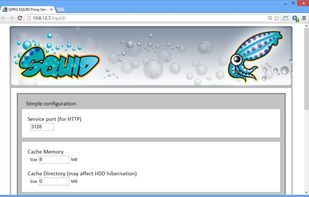
Squid is a caching proxy for the Web supporting HTTP, HTTPS, FTP, and more. It reduces bandwidth and improves response times by caching and reusing frequently-requested web pages. Squid has extensive access controls and makes a great server accelerator.

Amazon CloudFront is a global content delivery network (CDN) service that accelerates delivery of your websites, APIs, video content or other web assets through CDN caching.


Netfilter software comprises iptables, ipset, conntrack-tools, libnetfilter and more. It is the core of Linux firewalls and NAT. It consists of a set of hooks inside the Linux kernel and a number of utilities to manage callback functions.

HAProxy is free, open source software that provides a high availability load balancer and proxy server for TCP and HTTP-based applications that spreads requests across multiple servers.


Elastic Load Balancing automatically distributes your incoming traffic across multiple targets, such as EC2 instances, containers, and IP addresses, in one or more Availability Zones. It monitors the health of its registered targets and routes traffic only to the healthy targets.


The small but necessary Web Server category. Aside from legacy tools using Apache httpd, most services I know use Nginx or Microsoft's expensive proprietary models.

nginx ("engine x") is an HTTP web server, reverse proxy, content cache, load balancer, TCP/UDP proxy server, and mail proxy server.


Internet Information Services (IIS) for Windows® Server is a flexible, secure and easy-to-manage Web server for hosting anything on the Web. From media streaming to web application hosting, IIS’s scalable and open architecture is ready to handle the most demanding tasks.


DNS is one of the more complicated aspects of the modern web from an implementation standpoint and the below tools are the ones I see most often used for managing this process.

Unbound is a validating, recursive, and caching DNS resolver.
The C implementation of Unbound is developed and maintained by NLnet Labs. It is based on ideas and algorithms taken from a java prototype developed by Verisign labs, Nominet, Kirei and ep.net.
Unbound is designed as.

Kea is the next generation of DHCP software developed by ISC. It supports both DHCPv4 and DHCPv6 protocols along with their extensions, e.g. prefix delegation and dynamic updates to DNS.

Dnsmasq is a lightweight, easy to configure DNS forwarder and DHCP server. It is designed to provide DNS and, optionally, DHCP, to a small network. It can serve the names of local machines which are not in the global DNS.


AWS Route 53 is a reliable and cost-effective Domain Name System (DNS) web service that translates domain names into numeric IP addresses.

I'll add more services here later - this category deals with Certificate Authorities for ensuring secure traffic between endpoints.

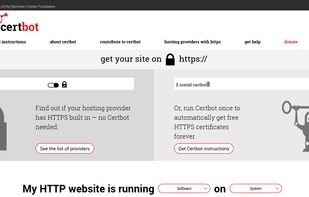
Automates HTTPS setup using Let's Encrypt certificates and supports multiple servers. Open source tool by EFF, prioritizing internet security.
This has become less of a trend lately in my observation, although I do see some stacks touting Functions As A Service (FaaS) as a goal.

AWS Lambda is a compute service that runs your code in response to events and automatically manages the underlying compute resources for you.


Deploy serverless code globally with high performance and scalability. Achieve instant execution close to users with seamless scaling and no cold starts.


Azure Functions is an event-driven, serverless compute platform that helps you develop more efficiently using the programming language of your choice. Focus on core business logic with the highest level of hardware abstraction.


Secrets management is super important in 2026 where hacks and infiltration of services becomes more commonplace.

Enhances security by managing secrets like tokens and passwords through centralized storage, access control, and encryption, ensuring data protection.


AWS Secrets Manager helps you manage, retrieve, and rotate database credentials, application credentials, OAuth tokens, API keys, and other secrets throughout their lifecycles. Many AWS services that use secrets store them in Secrets Manager.

Availability is often one of the highest stakes components of a modern online service stack. This was dominated by Splunk and the ELK stack (now known as the ElasticStack), but I've seen more and more companies transition to the Grafana stack.

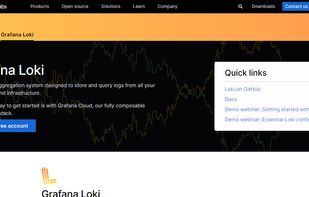
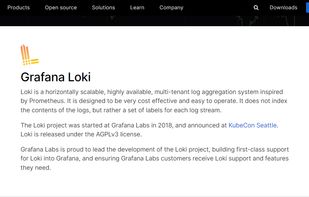
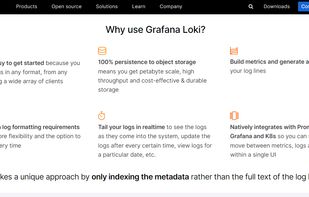
Grafana Loki is a horizontally-scalable, highly-available, multi-tenant log aggregation system inspired by Prometheus. It is designed to be very cost effective and easy to operate. It does not index the contents of the logs, but rather a set of labels for each log stream.

Prometheus is an open-source systems monitoring and alerting toolkit originally built at SoundCloud. Since its inception in 2012, many companies and organizations have adopted Prometheus, and the project has a very active developer and user community.
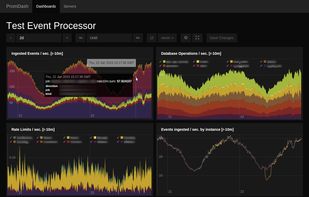
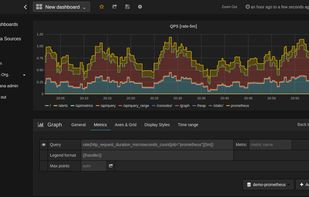
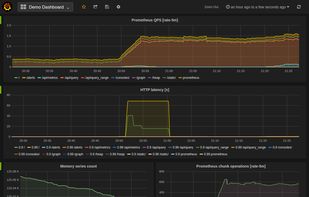
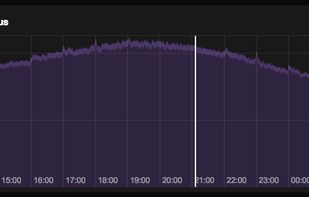

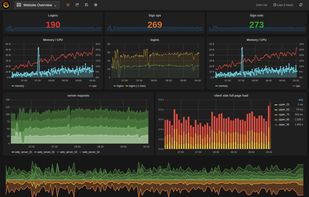
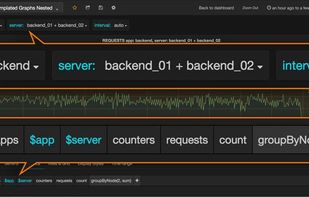
Grafana provides a powerful and elegant way to create, explore, and share dashboards and data with your team and the world.
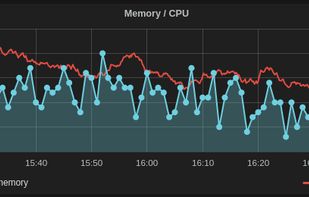


Grafana Tempo is an open-source, easy-to-use, and high-scale distributed tracing backend. Tempo lets you search for traces, generate metrics from spans, and link your tracing data with logs and metrics.


OpenTelemetry is a collection of tools, APIs, and SDKs. You use it to instrument, generate, collect, and export telemetry data (metrics, logs, and traces) for analysis in order to understand your software's performance and behavior.

Amazon CloudWatch is a monitoring service for AWS cloud resources and the applications running on AWS. It collect and track metrics, collect and monitor log files, set alarms, and automatically react to changes in AWS resources.
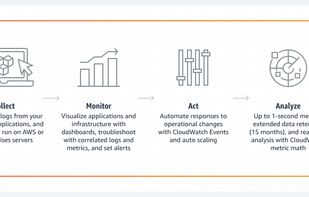

Amazon Managed Grafana is a fully managed and secure data visualization service that you can use to instantly query, correlate, and visualize operational metrics, logs, and traces from multiple sources.
Is there anything I missed? What tools have you seen commonly used in the tech world? Don't forget to like, comment and subscribe!
No comments so far, maybe you want to be first?


