Cost / License
- Free
- Open Source (MIT)
Application type
Platforms
- Mac
- Linux
- Visual Studio Code
 United States
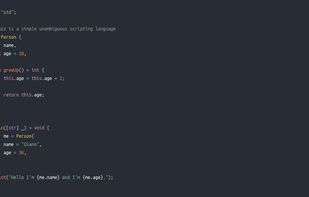


Apps similar to Zig include C (programming language), which is free and open source. Other options are Rust, C++, V (programming language) and GDScript. You can choose from more than 10 Programming Languages like Zig for Linux, Mac, Windows, self-hosting and the web.
United States
Nelua is a systems programming language for performance sensitive applications, like real-time applications and game engines. Its syntax and semantics are similar to Lua, but its garbage collection is optional, it provides optional type notations, and it is free from an...
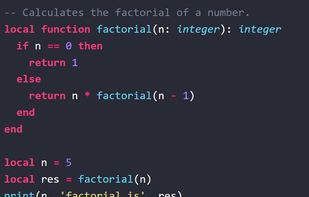


The Odin programming language is fast, concise, readable, pragmatic and open sourced. It is designed with the intent of replacing C with the following goals:


J is a high-level, general-purpose programming language that is particularly suited to the mathematical, statistical, and logical analysis of data. It is a powerful tool for developing algorithms and exploring problems that are not already well understood.
 Canada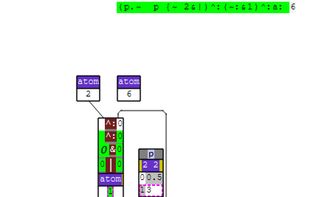

Wave is a system programming language that provides low-level control based on static typing and native code generation.
 South Korea

A community fork of a language named after a plant fungus. All of the memory-safe features you love, now with 100% less bureaucracy.


Rux is a fast, compiled, strongly typed, multi-paradigm programming language.
 Ukraine


Pony is an open-source, object-oriented, actor-model, capabilities-secure, high-performance programming language.