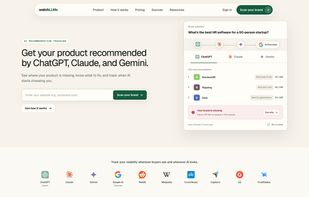
watchLLMs is an AI visibility and generative engine optimization platform that helps B2B brands understand how they appear when buyers ask AI what to buy. As more research, comparison, and vendor-shortlisting moves into ChatGPT, Claude, Gemini, and Google AI Overviews, the answer an AI assistant gives can become a buyer’s first impression of a category. watchLLMs helps teams see whether that answer includes their brand—or sends the opportunity to a competitor.
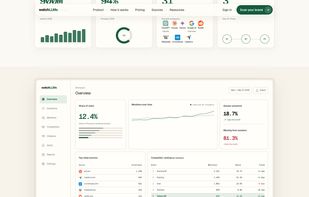
Traditional SEO tools show where a web page ranks in a list of search results. watchLLMs focuses on a different question: when a high-intent buyer asks an AI assistant for a recommendation, which brands does it name, what position does your brand hold, and which competitor is winning instead? It monitors buyer-intent prompts across leading AI answer engines, surfaces the real recommendations returned to potential customers, and tracks how often your brand appears across the questions that matter most.
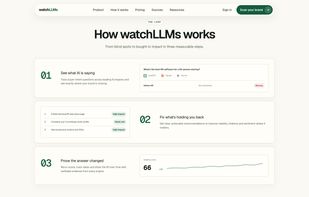
The platform is built for B2B SaaS founders, growth teams, SEO leaders, content marketers, and agencies that need a practical way to manage AI visibility. Start by defining your brand, website, category, competitors, target market, and the questions buyers are likely to ask. watchLLMs then turns that context into a focused monitoring workflow designed to reveal the gaps between how you want to be positioned and how AI assistants currently describe your market.
When a competitor is recommended and your brand is missing, watchLLMs does more than flag the loss. It shows the prompt, the answer, the brands that were named, and the citation or source signals that may be shaping the result. This makes it easier to move from a vague concern about “AI search” to a concrete understanding of the pages, entities, reviews, comparison content, and third-party sources influencing the recommendation.






No comments or reviews, maybe you want to be first?