


TrustedMARC
Like
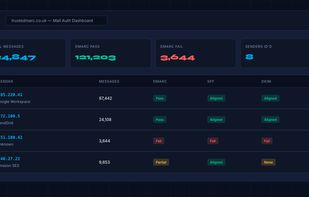
Processes DMARC aggregate report files locally, identifying senders by name, flagging spoofing, visualizing SPF and DKIM results, tracking trends, recommending DNS fixes, consolidating domains, and adding geolocation, all without any cloud upload or subscription required.

Cost / License
- Pay once
- Proprietary
Platforms
- Mac
- Windows

Features
Highlights All activities
TrustedMARC News & Activities
Recent activities
 Astra-Verify added TrustedMARC as alternative to AstraVerify
 Jan-Demsar added TrustedMARC as alternative to DemiSignal
 Paulo-Castro added TrustedMARC as alternative to Canny Pigeons
 trokohl added TrustedMARC as alternative to DMARC Lighthouse
- Mauricio B. Holguin updated TrustedMARC
- Trusted MARC added TrustedMARC
 Trusted MARC added TrustedMARC as alternative to DMARC Checker, DMARCguard, DomainPreflight, DMARCinator and 12 more


Developed by
 ScryMarc Software
 Licensing
Proprietary and Commercial product.Pricing
One time purchase (perpetual license) ranging between $39 and $149.Alternatives
19 alternatives listedBadge
Get an embeddable badge for TrustedMARCSupported Languages

No comments or reviews, maybe you want to be first?