


TensorFlow is an open source software library for machine learning in various kinds of perceptual and language understanding tasks.
Cost / License
- Free
- Open Source (Apache-2.0)
Platforms
- Mac
- Linux
- Windows
- Python


Sites and apps similar to Training Mule include TensorFlow, which is free and open source. Other options are HyperLabel, Supervisely, mlpack and CatBoost. In total there are nine Software Frameworks like Training Mule for Mac, Windows and Linux.
TensorFlow is an open source software library for machine learning in various kinds of perceptual and language understanding tasks.

A desktop application with a UX built for through-put, HyperLabel is a complete toolset for quality labeling process management and training data creation.
 United States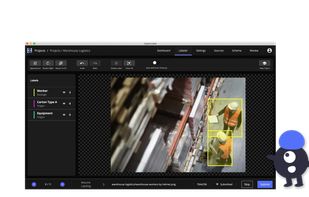
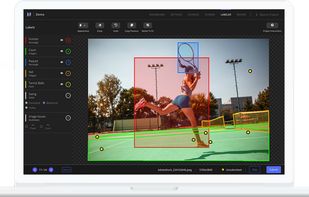
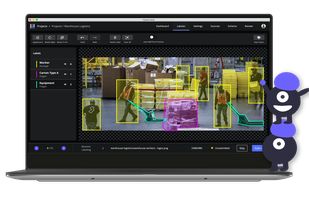


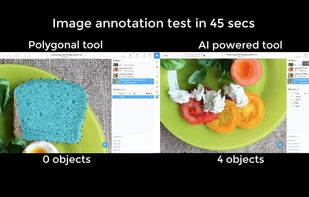
Supervisely helps people with and without machine learning expertise to create state-of-the-art computer vision applications. We care about entire workflow from raw data to building and deploying neural networks for your special task without coding.
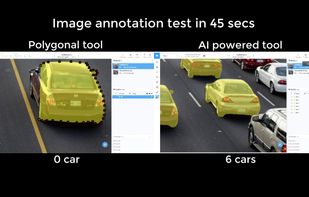




mlpack is a C++ machine learning library with emphasis on scalability, speed, and ease-of-use. Its aim is to make machine learning possible for novice users by means of a simple, consistent API, while simultaneously exploiting C++ language features.


CatBoost is an open-source gradient boosting on decision trees library with categorical features support out of the box for Python, R.


Eclipse Deeplearning4j is the first commercial-grade, open-source, distributed deep-learning library written for Java and Scala. Integrated with Hadoop and Apache Spark, DL4J brings AI to business environments for use on distributed GPUs and CPUs.


A downloadable annotation tool for NLP and computer vision tasks such as named entity recognition, text classification, object detection, image segmentation, A/B evaluation and more.

Cloud AutoML helps you easily train high quality custom machine learning models with limited machine learning expertise needed.

MXNet is a deep learning framework designed for both efficiency and flexibility. It allows you to mix symbolic and imperative programming to maximize efficiency and productivity. At its core, MXNet contains a dynamic dependency scheduler that automatically parallelizes both...


 Russia


