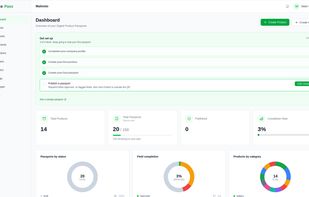
TracePass is a compliance platform for the EU Digital Product Passport (DPP) — the machine-readable record that products sold in the EU must carry under the Ecodesign for Sustainable Products Regulation (ESPR) and the EU Battery Regulation. A battery passport alone has 91 mandatory data fields; an electronics passport has around 166.
Instead of assembling those fields by hand or hiring a consultancy, TracePass automates the data work. You upload the documents you already hold — supplier datasheets, EPREL registrations, CE test reports, SVHC declarations, PEF studies — and TracePass reads them, maps each value to its regulated field, and requests only what's genuinely missing from your suppliers. It then publishes a GS1 Digital Link QR passport per product, with tiered access for the public, business partners, and authorities.
Key features:
- Regulation-specific templates for batteries, electronics, textiles, and more, kept current as delegated acts evolve
- Automated field extraction from existing product documents
- Supplier data requests for the gaps you can't fill yourself
- GS1 EPCIS 2.0 supply-chain event capture
- A REST API, an MCP server for AI assistants, and an n8n community node for no-code automation
- Hosted, with a free tier — passport templates update in place so existing passports stay compliant
TracePass is built for manufacturers, importers, and brands facing DPP deadlines (battery passports become mandatory in February 2027), who already hold most of their compliance data and need to assemble, publish, and maintain it rather than recreate it from scratch.
A few notes on why it's written this way:
- Leads with what a DPP is — AlternativeTo reviewers (and users) may not know the term; grounding it reads as substance, not promo.
- The "automated vs. consultancy" angle + the 91/166 numbers are your real differentiators (straight from your positioning and the comparison page we built) — citable specifics, not marketing fluff.
- Feature bullets give the listing concrete content (reviewers reject thin entries).
- Mentions the API/MCP/n8n — shows it's a real, integrable platform, not a landing page.
- No competitor bashing — describes the approach difference honestly (consistent with your no-disparagement rule).






 EU
EU


 Malin Ivanov
No comments or reviews, maybe you want to be first?