


TalkingAvatar
Like
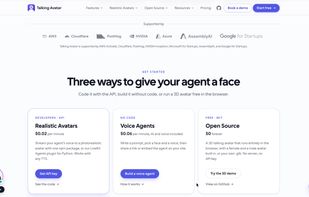
Real-time talking avatars for AI voice agents: lip-synced video streamed over WebRTC or LiveKit, plus a free MIT-licensed 3D avatar that runs in the browser.



Add Alternatives

0likes
0alternatives
0articles
Features
Highlights All activities
TalkingAvatar News & Activities
Recent activities
- talking-avatar added TalkingAvatar
Developed by
 TalkingAvatar.dev
Licensing
Open Source (MIT) and Freemium product.Pricing
Usage-based pricing (pay per credit or per use) + free version with limited functionality.Written in
Alternatives
0 alternatives listedBadge
Get an embeddable badge for TalkingAvatarSupported Languages

AlternativeTo Category
AI Tools & ServicesGitHub repository
- 11 Stars
- 4 Forks
- 1 Open Issue
- Updated
No comments or reviews, maybe you want to be first?