RemoteGenius
Platform for managing mixed-vendor remote IP devices behind CGNAT or firewalls using outbound-only reverse tunnels, eliminating VPNs and inbound ports, running fleets on distributed clusters, supporting any IP-enabled device, and ensuring cloud-independence.
Cost / License
- Subscription
- Proprietary
Platforms
- Linux
- Online
Features
Properties
- Lightweight
Features
- Two-factor Authentication
- End-to-End Encryption
- Ad-free
- Unattended Access
RemoteGenius News & Activities
Recent activities
- Danilo_Venom updated RemoteGenius
- infilta added RemoteGenius
infilta added RemoteGenius as alternative to LocalXpose, ngrok, wireport and Serveo
RemoteGenius information
What is RemoteGenius?
RemoteGenius (RG Platform) is a fleet-management system for remote IP-enabled devices: any hardware that exposes a web management dashboard, an internal API, or neither. It reaches those devices behind CGNAT and firewalls using outbound-only reverse tunnels, represents each one under a single vendor-neutral device shadow, and runs the whole fleet on regionally distributed clusters that stay operational without the cloud.
RG Platform is a fleet-management platform for remote IP-enabled devices — anything with a web management dashboard or an internal API, from network appliances and industrial controllers to cameras and sensors — that reaches hardware behind CGNAT and strict firewalls using outbound-only reverse tunnels, unifies mixed-vendor fleets under one device-shadow schema, and runs on a regionally distributed, air-gap-capable cluster architecture.
RG Platform is for anyone who operates IP-enabled hardware that lives on networks they don't fully control and can't easily reach inbound. Each segment below shares the same core need — reach, unify, and govern remote devices — but values a different RG mechanism most.
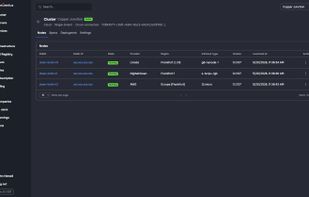
RG Platform is three layers with strictly separated responsibilities: a global cloud control plane for accounts and cluster registry, autonomous regional clusters that execute all device operations, and edge agents and bridges on the devices themselves. Users authenticate to the cloud and exchange that session for short-lived, cluster-scoped credentials; devices authenticate only to their own cluster. The cloud holds no device credentials and sits on no device data path.