
PostPeer icon
PostPeer icon

PostPeer

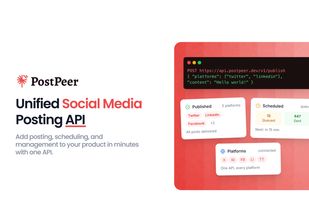
PostPeer is a social media API that lets you post, schedule, and manage content across Twitter/X, Instagram, YouTube, TikTok, Facebook, Threads, and Pinterest, all from one endpoint.
PostPeer Thumbnail

Cost / License

  • Freemium (Subscription)
  • Proprietary

Platforms

  • Software as a Service (SaaS)
0likes
0comments
0articles

Features

  1.  No Coding Required
  2.  Social Media Automation
  3.  Scheduling
  4.  Third party integrations

PostPeer News & Activities

Highlights All activities

Recent activities

PostPeer information

  • Developed by

    IL flagPostPeer
  • Licensing

    Proprietary and Freemium product.
  • Pricing

    Subscription that costs up to $120 per month + free version with limited functionality.
  • Alternatives

    3 alternatives listed
  • Supported Languages

    • English

AlternativeTo Categories

DevelopmentOffice & Productivity

Popular alternatives

View all
PostPeer was added to AlternativeTo by jonathan_geiger on and this page was last updated .
No comments or reviews, maybe you want to be first?

What is PostPeer?

PostPeer is a social media API that lets you post, schedule, and manage content across Twitter/X, Instagram, YouTube, TikTok, Facebook, Threads, and Pinterest, all from one endpoint.

Key Features

  • Unified Posting API: Post to multiple social platforms with a single request, removing the need for separate integrations.
  • Scheduling Engine: Plan and automate posts across platforms with consistent timing and reliability.
  • Multi-Platform Support: Manage content for different social networks through one unified interface.
  • Developer-First Experience: Clean API, clear documentation, and fast integration built for developers.

Benefits

  • Faster Development: Integrate social media posting and scheduling in minutes instead of building and maintaining multiple APIs.
  • Reduced Complexity: Replace multiple platform-specific integrations with one unified, easy-to-use API.
  • Scalable Automation: Easily handle high volumes of content across platforms without additional infrastructure.
  • Focus on Core Product: Spend less time on integrations and more time building features that matter.