


Cost / License
- Freemium
- Proprietary
Since
- Since 2016
 United Kingdom


Apps similar to Micro-Cap include KiCad, which is free and open source. Other options are Circuit JS, QUCS, LibrePCB and LTspice. Circuit Simulators like Micro-Cap are a crowded field, with more than 50 alternatives for Windows, Mac, Linux, the web and iPad.
United Kingdom


Circuit Wizard is a revolutionary new system that combines circuit design, PCB design, simulation and CAD/CAM in one complete package.
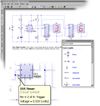


CircuitMaker is the best free PCB design software by Altium for Open Source Hardware Designers, Hackers, Makers, Students and Hobbyists. From the about page of the website:


With Sprint-Layout you can design your PCB’s quick and easy. There is no unnecessary “ballast” which makes it difficult to keep the overview or which makes the usage almost impossible. Because of the logical and understandable strucure of Sprint-Layout the usage is very easy to...
 Germany
 EU


McCAD 3-SPICE is based on the latest version (3F5) of Berkeley's SPICE 3 and permits interactive mixed mode circuit simulation. It was developed specifically to take advantage of the processing speeds available thus permitting extremely fast simulations.
 United States


Simulates and analyses electronic circuits that can range in complexity from a single resistor to an integrated circuit comprising tens-of-thousands of devices.
United Kingdom



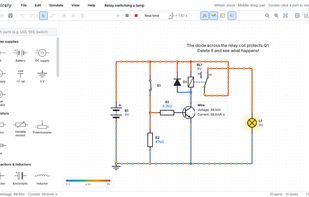
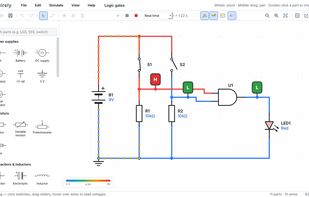
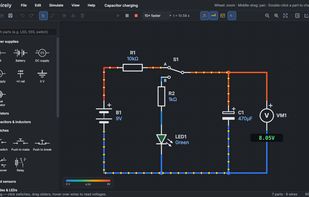
Free, open-source circuit design and simulation app. Draw a circuit, press play, watch it work: glowing LEDs, spinning motors, 555 timers, logic chips, op-amps and a live graph. For the workplace, the classroom and the workbench.
United Kingdom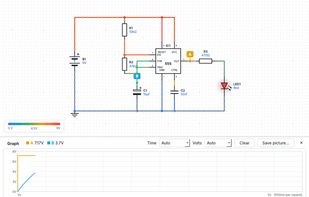


SIMetrix/SIMPLIS enables engineers to design and simulate switching power electronics systems



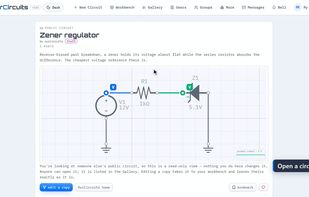
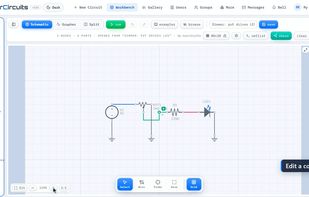
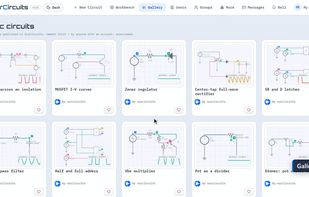
Browser-based schematic editor for building analog and digital circuits without installation or an account. Run transient, AC and DC sweeps, operating-point and parameter analyses, and view waveforms as values change. Import or export SPICE netlists and share.
United States


Circuit Solver is an electronic circuit simulator. You drag your electrical components and place them on one at a time. You hook up some sources and you place some meters to read the values.


