Food Info icon
Food Info icon

Food Info

Detailed nutrition facts for millions of foods, covering calories, macros, vitamins and minerals, merged from six countries' official food datasets.
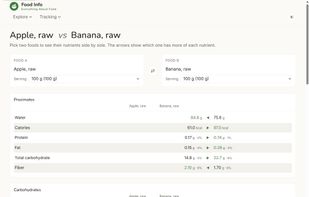
Food Info screenshot 1

Cost / License

  • Freemium (Subscription)
  • Proprietary

Platforms

  • Online
0likes
0comments
0articles

Features

Properties

  1.  Lightweight

Features

  1.  Ad-free
  2.  Dark Mode
  3.  Weight Tracking
  4.  Nutrition Tracking
  5.  Calorie Counting
  6.  Food database

Food Info News & Activities

Highlights All activities

Recent activities

Food Info information

  • Developed by

    GB flagDCPNET LTD
  • Licensing

    Proprietary and Freemium product.
  • Pricing

    Subscription ranging between $7 and $40 per month + free version with limited functionality.
  • Alternatives

    12 alternatives listed
  • Supported Languages

    • English
    • Romanian

AlternativeTo Category

Sport & Health
Food Info was added to AlternativeTo by Some-of-the-things on and this page was last updated .
No comments or reviews, maybe you want to be first?

What is Food Info?

Food Info is a nutrition database for every food on the shelf. Search any food and get a clean breakdown of calories, macros, vitamins and minerals, shown both per 100 g and per the serving you actually eat, with reference intake percentages for your region.

What makes it different is provenance. Most nutrition sites quietly rely on a single source, usually the USDA. Food Info merges six official datasets into one searchable database: USDA FoodData Central for the United States, McCance and Widdowson's CoFID for the United Kingdom, ANSES Ciqual for France, the Danish Food Composition Database, FSANZ AUSNUT for Australia and New Zealand, and Open Food Facts for branded products. Every food page names the dataset the numbers came from, so a figure can be traced back to its source rather than taken on trust.

Beyond lookups you can compare two foods side by side, find the best food sources of any nutrient with a reverse search, keep a food diary, and generate meal plans that target your nutrient gaps. You do not need an account to look up a food.

The underlying harmonised dataset is published openly on Zenodo with a DOI, so researchers can cite it.