


Echo by Tracer
Like
Echo combines specialist open-weight models into one system, allocating compute where it improves the result.
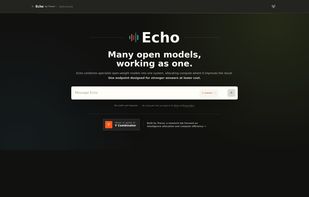

Cost / License
- Pay once
- Proprietary
Application type
Platforms
- Online
- OpenCode


Features
Highlights All activities
Echo by Tracer News & Activities
Recent activities
 Paul added Echo by Tracer as alternative to Treg
 Xblasters added Echo by Tracer as alternative to Kryvlo
 Paul added Echo by Tracer as alternative to Experiential
 Superstar added Echo by Tracer as alternative to OpenAdapter
 AntSeed added Echo by Tracer as alternative to AntSeed
 TokenRouter added Echo by Tracer as alternative to TokenRouter
 codefarmer4GDP added Echo by Tracer as alternative to TokenDos
 Paul added Echo by Tracer as alternative to GPT4ALL, Deep Infra, liteLLM, OKRouter and 33 more
- Paul added Echo by Tracer


Developed by
 Tracer
 Licensing
Proprietary and Commercial product.Pricing
One time purchase (perpetual license) ranging between $3 and $50.Alternatives
44 alternatives listedBadge
Get an embeddable badge for Echo by TracerSupported Languages

No comments or reviews, maybe you want to be first?