Bugstack is autonomous software maintenance. It watches your app and your GitHub repository, finds the cause when something breaks, writes the fix, and opens a pull request.
What it handles:
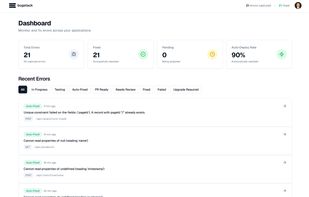
- Crashes: your app reports uncaught server errors through an SDK for JavaScript and TypeScript, Python, Ruby or Go. Bugstack reads the failing code, works out the cause and writes the fix.
- Failing CI and failed deploys: a red run on your default branch or a failed deploy on a connected host is diagnosed and fixed the same way.
- Customer bug reports: a bug reported in plain words, on a Zendesk, Intercom or Freshdesk ticket, a support email, a GitHub issue or in the dashboard, is reproduced with a failing test before anything is fixed. The customer hears back once the fix is live.
- Package upkeep: outdated and vulnerable packages are found on a schedule, with upgrade pull requests for npm.
- Security: nightly scans for committed secrets, and security audits that try to prove each problem before reporting it.
Every bug fix is proven in an isolated sandbox first. Bugstack writes a test that fails on your current code for the bug's own reason, then shows the same test passing with the fix while the rest of your suite stays green. The pull request includes that test.
You set how much it does alone. Each repository has an autonomy level: Suggest, Review or Autopilot. New repositories start on Review, where Bugstack opens the pull request and you merge it. Every action is recorded in an audit log.
Bugstack's tester is first on the public SWT-Bench Verified leaderboard, reproducing 91.5% of 433 real GitHub issues with a failing test, as scored by the benchmark's maintainers.
Pricing: one plan, Pro, at $100 a month with $100 of usage credit included each month. New workspaces start with a 14-day trial that includes $50 of credit and a first security audit.




 bugstack


No comments or reviews, maybe you want to be first?