
BABA NVR icon
BABA NVR icon

BABA NVR

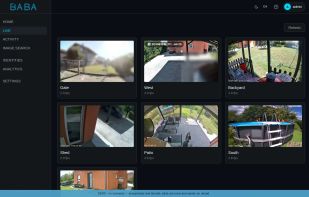
BABA is a self-hosted NVR built on modern detection models. It detects people and vehicles on every frame, whether or not anything moves, follows them across the view and recognises people when they return, on another camera or the next day in a different jacket.
BABA NVR screenshot 1

Cost / License

Platforms

  • Linux
  • Self-Hosted  Docker Compose on an NVIDIA GPU (TensorRT), an Intel GPU (OpenVINO) or, slowly, the CPU.
0likes
0articles
Save

Features

  1.  Video-surveillance

BABA NVR News & Activities

Highlights All activities

Recent activities

BABA NVR information

GitHub repository

  •  0 Stars
  •  0 Forks
  •  0 Open Issues
  •   Updated  
View on GitHub

Popular alternatives

View all
BABA NVR was added to AlternativeTo by Ivo-Boskovic on and this page was last updated .

No comments or reviews, maybe you want to be first?

Official Links

What is BABA NVR?

BABA is a self-hosted NVR built on modern detection models. It detects people and vehicles on every frame, whether or not anything moves, follows them across the view and recognises people when they return, on another camera or the next day in a different jacket. A person is named only by the face, the one signal that survives a change of clothes; once named, the track keeps the name through a turned head or a pulled-up hood, and appearance alone never names anyone.

Zones drawn on the camera view turn movement into events (entering, leaving, staying too long), each with its own rules, and SAM2 can outline a zone from one click. Every camera is recorded around the clock without transcoding, with a timeline, clips on demand and tiered retention. A photo searches the whole history for people who look like it. Licence plates can be read too, with many noisy readings of one car combined into a single plate; plate reading is optional and its models are enabled by the user. Alerts go out by e-mail, Slack, Telegram or webhook; live view is a low-latency WebRTC grid. Video stays on your own network unless you connect an outside channel yourself.

Runs with Docker Compose on NVIDIA (TensorRT), Intel (OpenVINO) or, for trying it out, the CPU. Source-available under PolyForm Noncommercial 1.0.0: free for personal use, not OSI open source. Demo: https://demo-baba.boskovic.biz