


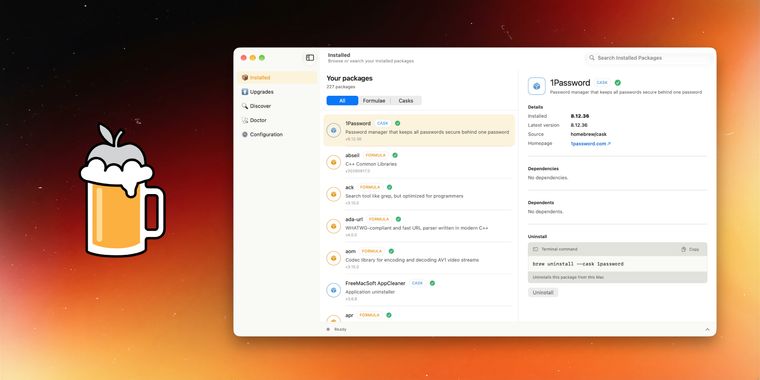

Homebrew 7.0 arrives with faster installs, hardened security, and a native macOS app
The open-source package manager Homebrew has released version 7.0, marking a major milestone for the project widely used by developers and users to install software on macOS and Linux. Announced by longtime maintainer Mike McQuaid, the release represents the most substantial update since Homebrew 6.0, with improvements spanning performance, security and platform support.
Performance is a headline feature: Homebrew 7.0 promises faster installations and upgrades across the board. On the security front, the release introduces significantly hardened protections. Homebrew now sandboxes formula and cask operations, cutting down on arbitrary Ruby execution and repeated package loading, and delivers its setup as signed structured data. The project has also begun migrating dependency downloads into a dedicated fetch phase, so that the subsequent install step runs with networking disabled and read-only caches. Sandbox reads of users' home directories are blocked by default, keeping personal files out of package builds. In addition, Homebrew now ships built-in vulnerability checks and an advisory database, and it verifies attestations for supported third-party taps, extending build-provenance checks beyond the core repository. Software bills of materials now include upstream package identifiers, letting external tools map Homebrew packages back to registries such as PyPI, npm and Cargo.
Beyond the command line, macOS users get a native Homebrew application, bringing the package manager's interface to the desktop. The release also redraws the project's support map: macOS 10.15 support has ended, and Intel Macs have been demoted to Tier 3 support status, reflecting the ecosystem's continued shift toward Apple Silicon. For tap maintainers and security auditors, new tooling includes brew benchmark for measuring cold and warm install workloads, improved formula template generation with offline build phases for Go and Rust projects, and expanded automation for testing and packaging workflows.





- Package Manager
- Free
- Open Source
Related news
External links
- Homebrew: 7.0.0Homebrew • Official source