



Qt Creator 21 arrives with new profiler, expanded AI agent control, and improved editing
The Qt Company has released Qt Creator 21, the latest version of its cross-platform IDE, arriving roughly two months after the beta. The headline changes center on AI and performance: the Agentic AI chat (ACP) integration and MCP server are now enabled by default, letting AI agents automate more of the editing, building, running, and debugging workflow, while developers retain control over what agents can do and can now see token usage and cost information per session and per turn. The MCP server now requires authentication with a bearer token by default, a security hardening measure that agents configured inside Qt Creator handle automatically, though external connections must supply an authorization header. The update also brings many new individually configurable tools to the MCP server, support for the elicitation API that lets agents request structured input from users, and quick access to mode and model selection directly from the chat input. The Agentic AI chat integration and MCP server have also been bumped to the 2026-07-28 protocol version.
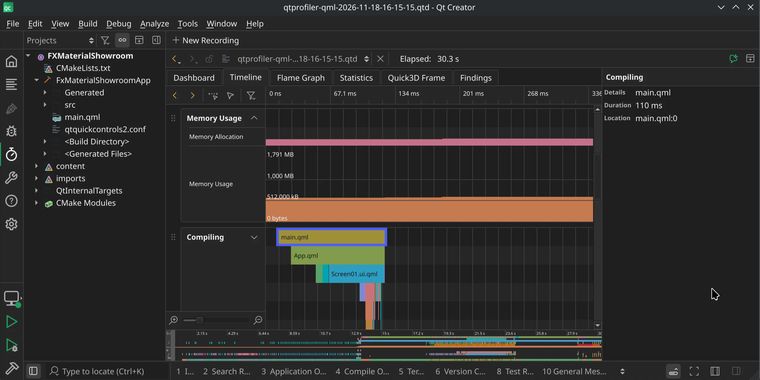
Performance work takes center stage in the new profile mode, which integrates the Qt Profiler tool replacing the long-standing QML Profiler. Its dashboard scores various performance characteristics and offers concrete suggestions for fixing individual findings, with traces opening as separate documents. Profiling is complemented by a call-stack sampler on Windows and macOS and support for Qt tracepoints. Debugging itself gains an experimental combined engine for C++ and QML that produces unified stack traces, alongside new modular debugger backends available behind an experimental preference toggle.
Version control receives a notable overhaul with a changes' navigation view offering diff, stage, revert, log, and annotate actions, plus a Git log view rendering the commit graph with checkout and cherry-pick from its context menu. Editing improvements include a .qdoc editor with rendered preview, optional spell checking for comments and commit messages, friendlier Git merge-conflict markers, and substantial FakeVim enhancements covering a large subset of Vimscript. On the projects side, the CMake parser was updated to 4.2, a built-in indenter replaces the need for cmake-format, and device support expands with experimental HarmonyOS and remote Windows-over-SSH targets, a new Android Logcat view, and Podman container support.




No comments so far, maybe you want to be first?