



AutoExplore
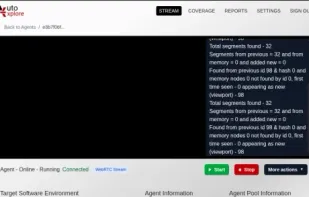
AutoExplore delivers always-on, autonomous testing that navigates your app like a real user. Catch errors, security vulnerabilities and accessibility issues before deploying to production.
Cost / License
- Subscription
- Proprietary
 EU
EUPlatforms
- Online
- Software as a Service (SaaS)

AutoExplore
Features
- AI-Powered
Tags
- Software as a Service
- Software developer
- quality-assurance
AutoExplore News & Activities
Recent activities
- havunen updated AutoExplore
- havunen added AutoExplore
AutoExplore information
Developed by
 AutoExplore Oy
 Licensing
Proprietary and Commercial product.Pricing
Subscription that costs from $1490 per month.Alternatives
0 alternatives listedSupported Languages
- English
What is AutoExplore?
AutoExplore is an AI-powered, autonomous software testing tool designed to replace manual exploratory testing and reduce reliance on brittle, script-based automation. Instead of following predefined test cases, AutoExplore independently explores applications, interacts with user interfaces, and continuously looks for failures, regressions, and unexpected behavior.
AutoExplore adapts automatically to UI changes, making it especially well-suited for fast-evolving web and SaaS applications where traditional automated tests require constant maintenance. By simulating realistic user behavior and exploring diverse interaction paths, it uncovers edge cases that scripted tests and human testers often miss.
The tool runs continuously and requires minimal setup—no test scripts, no selectors, and no complex configuration. This makes AutoExplore a strong alternative to traditional test automation frameworks, manual QA processes, and record-and-playback tools.
Key features include:
Fully autonomous exploratory testing No test case or script creation required Intelligent UI interaction and navigation Continuous regression and stability testing Automatic adaptation to UI changes Actionable failure reports with reproduction steps
AutoExplore is ideal for:
SaaS and web application teams Agile and fast-moving development environments Teams looking to reduce manual QA effort Replacing or complementing traditional test automation tools
AutoExplore helps teams catch critical issues earlier, increase real-world test coverage, and keep software reliable as it evolves.